The Dolomites Alpenglow: Val di Funes, Seceda Ridge & Tre Cime
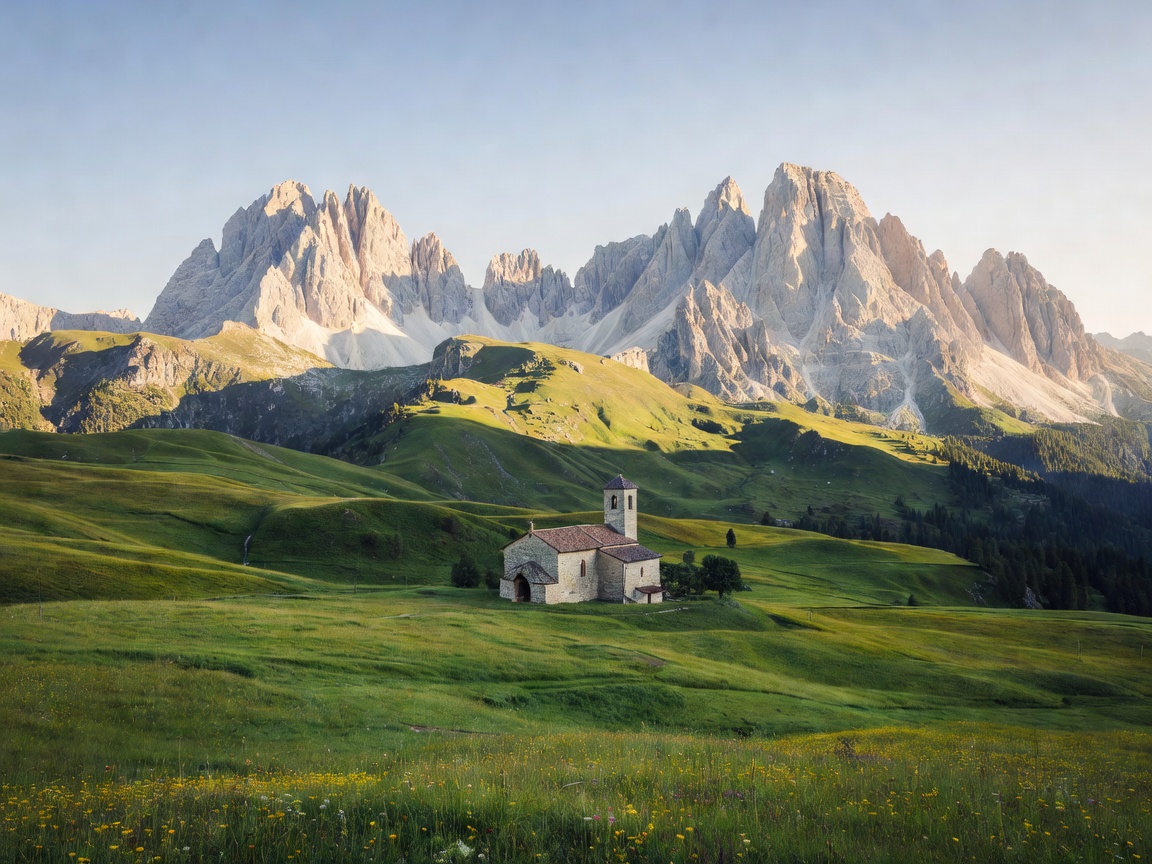
The Italian Dolomites (specifically the Trentino-Alto Adige / Südtirol region) represent one of the planet’s most dramatic alpine geological formations. Formed from fossilized coral reefs rising out of prehistoric ocean basins, their vertical magnesium-rich limestone cliffs possess an extraordinary optical trait: Enrosadira, the phenomenon whereby the pale rock faces burn with intense scarlet, orange, and violet tones as the sun drops beneath the horizon.
1. Val di Funes & Santa Maddalena Church
The classic viewpoint over Santa Maddalena is accessible via the panoramic walking path behind the village cemetery (GPS: 46.6433° N, 11.7145° E). The primary photographic challenge here is subject isolation. The small church with its gothic steeple sits at the midpoint of rolling pastures, with the sheer 1,000-meter wall of the Odle/Geisler peaks rising precipitously behind it.
Do not shoot this scene with an ultra-wide angle lens. An ultra-wide optic will render the Odle peaks tiny and distant. To create immense dramatic scale, mount a 70-200mm f/2.8 or 100-400mm lens from the upper pasture trail. Compressing the distance between the steeple and the limestone face at 120mm to 160mm yields the definitive compositional balance.
2. Seceda 2,500m Ridgeline
Rising above Ortisei in Val Gardena, Seceda offers the sheerest vertical drop-off in the western Dolomites. The ridge drops hundreds of meters vertically into the valley on the northern side while sweeping into smooth emerald grasslands to the south.
- Sunrise Vantage: Ride the earliest cable car or hike up from Col Raiser. As morning light strikes the knife-edge crest from the east, shadows cast deep triangular voids down the cliff faces.
- Recommended Filter: 2-Stop Soft Graduated Neutral Density (GND) to retain cloud detail above the ridge while preserving shadow detail in the grassy valleys.
- Exposure Settings: f/11, 1/125s, ISO 100 on a heavy carbon fiber tripod to withstand alpine ridge gusts.
3. Tre Cime di Lavaredo & Cadini di Misurina
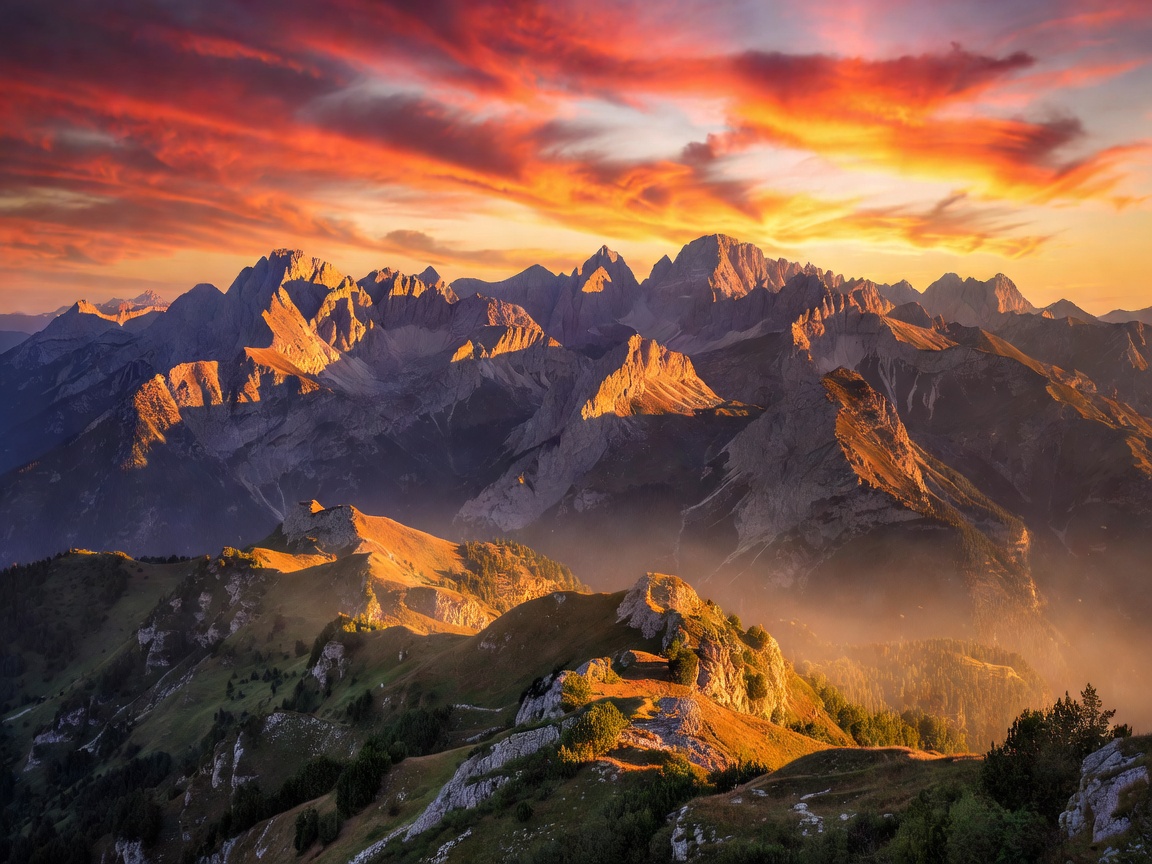
Tre Cime di Lavaredo (Drei Zinnen) forms the iconic trio of freestanding monoliths. While the loop trail around the Three Peaks is popular, the highest artistic payoff is found by walking 30 minutes south toward the Cadini di Misurina ridge (GPS: 46.5982° N, 12.2988° E).
The jagged, Gothic spire formations of Cadini look like a dark stone cathedral emerging from the clouds. During late September, golden larch trees in the lower valleys provide vibrant natural foreground color contrasting with fresh early-season snowfall on the upper peaks.
Recommended Field Pack
- Body: Full-frame mirrorless sensor with 40MP+ resolution for fine rock texture reproduction.
- Optics: 16-35mm f/2.8 (for ridge expanses), 70-200mm f/4 (essential for mountain compression).
- Support: Heavyweight tripod with spiked feet for scree slopes.
- Navigation: Offline Topo GPS maps and battery warming wraps (cold alpine nights drain Li-ion cells rapidly).