Santorini Architecture: Mastering High-Contrast Whitewash & Blue Domes
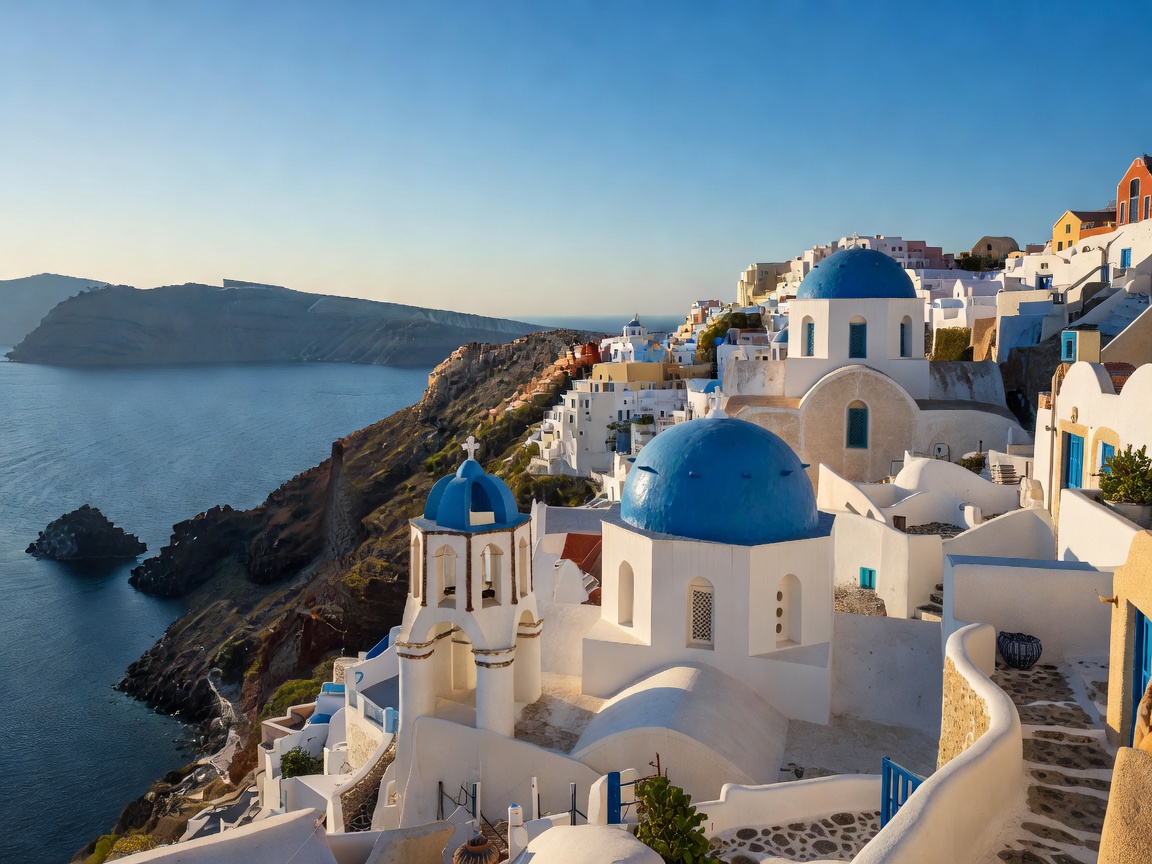
Santorini presents one of the most severe dynamic range challenges in architectural and landscape photography. The interplay between chalk-white lime-washed building surfaces and the deep, light-absorbing cobalt blue of the Aegean Sea creates an exposure disparity exceeding 14 stops under midday Mediterranean sunlight.
1. The Oia Blue Domes (Agios Spyridon & Anastasi)
The internationally recognized vantage point over the twin blue domes (GPS: 36.4614° N, 25.3756° E) is situated in a narrow pedestrian alleyway off Nik. Nomikou street.
- The Sunrise Strategy: While 95% of photographers gather for the sunset, the blue domes face southwest, meaning morning light strikes the caldera cliffs with soft, direct luminescence without harsh backlight flares. Furthermore, alleys are completely empty between 06:00 and 07:30.
- Exposure Metering: Spot meter on the whitewashed wall directly adjacent to the domes and adjust exposure compensation to +1.3 or +1.7 EV to ensure whites remain clean without blowing out the highlights.
During mid-summer months, hot air rising from dark volcanic rock causes severe thermal distortion (heat shimmer) across long-lens caldera compositions. For crisp clarity across the bay toward Therasia, shoot within the first 90 minutes after sunrise when surface temperatures are balanced.
2. Imerovigli & The Skaros Rock Monolith
Located 300 meters above the sea at the highest point of the caldera rim, Imerovigli offers a far more expansive, architectural aesthetic than congested Oia.
The trail descending toward the ruins of Skaros Fortress provides extraordinary framing where the rugged dark volcanic promontory contrasts against minimal white church domes (such as Theoskepasti Chapel) floating suspended over the sea.
3. Night & Blue Hour Long Exposures
Once the sun sinks beneath the horizon, the cliff face transforms. The warm tungsten and LED architectural lighting inside cave suites lights up against the deep indigo blue of the sea.
Set your camera on a steady travel tripod, switch to manual focus using 10x sensor magnification, and capture a sequence of 4s to 15s exposures at f/8 to generate clean starburst patterns around street lanterns.